
About Stonehan Accountancy
At Stonehan Accountancy, P.C. (Stonehan), we bring unmatched expertise in financial and business management tailored specifically for the real estate sector. We transcend the role of traditional CPAs, offering a sophisticated, CFO-level approach to your financial needs. In today's complex and rapidly evolving market, we offer sophisticated investors the financial guidance and assurance needed to meticulously manage their real estate investments.
WHY CHOOSE STONEHAN?
Unparalleled Depth of Analysis:
Our commitment to rigorous scrutiny and contrarian thinking ensures we delve deeper than most to vet investment opportunities and partners. This meticulous approach allows us to confidently identify lucrative ventures that meet your high standards.
CFO-Led Expertise:
With a leadership background that includes managing a $1B Real Estate Lending Fund registered with the SEC and serving over 1,400 investors, our CFO brings unparalleled financial acumen and strategic insight to your portfolio.

Comprehensive Asset Management:
We manage assets exceeding $25 million, showcasing our capability to handle substantial portfolios with precision and sophistication. Our experience ensures that every aspect of your investments is optimized for maximum return and minimal risk.
Innovative Real Estate Development:
As Co-GP/CFO of a Modular Real Estate Development project, we integrate financial expertise with hands-on development experience, providing a unique perspective that enhances your real estate investments.
Entrepreneurial Perspective:
Having started our own CPA practice, we infuse every client engagement with entrepreneurial energy and innovative thinking. This dynamic approach allows us to deliver exceptional service and proactive financial solutions.
Entrust Stonehan with your real estate financial needs and experience the benefits of working with a firm dedicated to optimal planning, implementation, management, and control of your real estate financial operations. Discover how Stonehan Accountancy, P.C. can transform the financial elements of your real estate business with precision and sophistication.
Our Core Values
Ruthless Skepticism
Meticulous Financial Planning
Comprehensive Vision
Contrarian Thinking
White-Glove Service
Ruthless Skepticism
Ruthless
Skepticism
Meticulous
Financial
Reporting
Comprehensive
Vision
Contrarian
Thinking
White-Glove
Service
Entrepreneurial
Execution
How Fund and Entity Structure Shape Reporting, Operations, and Investor Confidence (Part 2)
Most fund managers assume entity structure is a legal formality.
Something that gets handled once at formation, signed, filed, and forgotten.
In practice, entity structure is one of the earliest places where operational stress shows up inside a fund. Long before returns suffer, long before investors complain, long before audits become painful, the cracks usually appear in how the entity itself was designed to function.
When entity structure is misaligned, even strong deals become harder to manage.
Entity Structure Is an Operating Decision, Not a Legal Checkbox
Entity structure determines how a fund actually operates day to day.
It affects:
how capital moves in and out
how reporting is produced and reviewed
how distributions are calculated and communicated
how responsibilities are divided between GP entities
how compliance obligations stack over time
When entity structure is treated as a template decision, sponsors are forced to patch problems later with workarounds, side agreements, or manual processes. That is not scaling. That is survival.
Strong funds design entity structure to support operations, not just ownership.
The First Pressure Point: Fund Reporting
Fund reporting is often the first place where entity misalignment becomes visible.
When entity structure is overly complex or poorly organized, reporting becomes:
inconsistent across entities
difficult to reconcile
hard to explain to investors
dependent on spreadsheets instead of systems
This creates friction between the sponsor, the accountant, and the investors. Not because anyone is doing poor work, but because the structure itself makes clean reporting difficult.
Investor-grade financial reporting is not a formatting issue. It is a structural outcome.
Entity Structure and Capital Flow
Capital calls and distributions expose structural flaws quickly.
Misaligned entities lead to:
unclear capital accounts
confusion around allocation mechanics
delayed distributions
manual tracking of balances
increased risk of errors
Capital call and distribution management works best when entity design supports clarity. When entities are layered without intention, sponsors lose visibility into where capital sits and how it should move.
At scale, this becomes a governance issue, not an accounting one.
Compliance Compounds Over Time
Entity structure also determines how compliance obligations grow.
Each additional entity adds:
filing requirements
state exposure
recordkeeping obligations
coordination between advisors
Without a clearly defined fund compliance framework, sponsors rely on reactive fixes instead of ongoing oversight. Over time, this erodes confidence internally and with investors, even when performance is strong.
Fund compliance is not about avoiding penalties. It is about maintaining control.
CFO-Level Oversight Changes the Equation
Most fund managers do not need more forms or more advisors.
They need CFO-level oversight that understands how:
entity structure
fund operations
financial reporting
compliance obligations
and investor communication
interact as a system.
CFO-level oversight connects structure to reporting, reporting to governance, and governance to investor confidence. It prevents small structural decisions from turning into large operational problems later.
Why Fixing This Early Matters
Entity structure becomes harder to change as a fund matures.
Once investors are in, capital is deployed, and reporting expectations are set, options narrow quickly. That is why many funds live with inefficiencies for years, even when leadership knows something is off.
The strongest sponsors review entity structure not because something is broken, but because growth demands it.
Final Takeaway
Entity structure is not about complexity or cleverness.
It is about fit.
Funds that scale cleanly design structures that support fund operations, investor-grade financial reporting, compliance discipline, and clear capital movement. Funds that struggle often inherit structures that were never designed to operate at scale.
This is where experienced, CFO-level guidance makes the difference.
If your fund structure has not been reviewed recently, or if reporting, compliance, or capital flow feels harder than it should, it may be time to step back and evaluate whether the structure is still serving the business.
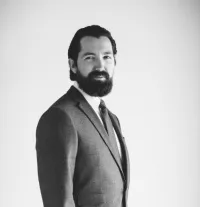

JAMES BOHAN – FOUNDER
James Bohan is a multi-faceted real estate professional, CPA, and entrepreneur. As the founder of Stonehan, he manages over $20MM of real estate while also providing accounting, tax, and fractional CFO solutions to real estate businesses, funds & syndicators . With more than 15 years’ of experience, he brings a wealth of knowledge in analyzing real estate transactions, tax structuring, creative financing techniques, and working capital management. Within the real estate investment management industry, Mr. Bohan is well regarded for his deep understanding of the complexities involved with a multitude of investment assets and complicated organizational structures.
Prior to Stonehan, James served as the inaugural employee and Chief Financial Officer of a Los Angeles-based real estate investment management firm, Mosaic Real Estate Investors. There, he played a key role in the firm’s growth and aligned the team through collaboration of management and stakeholders regarding strategic and financial planning, underwriting of debt and preferred equity investments, investor relations and reporting, risk management, compliance, cash flow, treasury, operating plans, tax matters, accounting, staffing, and policy development. Through his tenure with the company he oversaw all financial matters for the firm’s first ~$1B in loan commitments and the investor base grow to over 1,400 HNW investors and institutions.
Before joining Mosaic, James began his accounting career with the prestigious firm, Rothstein Kass, which was considered the premier boutique accounting firm for alternative investment vehicles: hedge fund, private equity, and venture capital firms. He worked there from 2010 until 2015 and during this time Rothstein was acquired by KPMG. James became an expert in real estate tax matters while offering tax and wealth management counsel to partnerships, trusts, REITs, corporations, and high-net-worth clients. He serviced private equity real estate firms with collective assets under management over $10B and consulted on over $2B of real estate transactions.
During this time from 2010 – 2015, James earned his California CPA license and was admitted to the Dollinger Master of Real Estate Development program at USC’s Sol Price School of Public Policy. He earned his Master’s in Real Estate Development (MRED) in 2015, graduating in the top 5% of his class and achieving an honorable mention for outstanding performance on the final comprehensive examination, all while continuing to work part-time for KPMG. He focused his undergraduate studies in Real Estate Finance and International Business, earning bachelor’s degrees in both Accounting and Business Administration from USC. His undergraduate academic achievements at USC included being accepted into the Marshall School of Business Honors Program and earning a spot on the Dean’s List. His collegiate social life centered around the Delta Chi Fraternity where he was elected to become a member of the executive committee. His summers were spent learning the nuances of real estate while serving internships in a variety of settings: residential mortgage lending, home building, and both corporate and onsite property management.
Mr. Bohan stays active professionally with involvement in the NIBCA, Information Management Network, and various other trade organizations. An avid traveler, he has visited over 40 countries, spent a semester studying abroad at Thammasat University in Thailand, and possesses dual citizenship in the United States of America and the Republic of Ireland.



⚡ Site Built with BAMF Technology ⚡