
About Stonehan Accountancy
At Stonehan Accountancy, P.C. (Stonehan), we bring unmatched expertise in financial and business management tailored specifically for the real estate sector. We transcend the role of traditional CPAs, offering a sophisticated, CFO-level approach to your financial needs. In today's complex and rapidly evolving market, we offer sophisticated investors the financial guidance and assurance needed to meticulously manage their real estate investments.
WHY CHOOSE STONEHAN?
Unparalleled Depth of Analysis:
Our commitment to rigorous scrutiny and contrarian thinking ensures we delve deeper than most to vet investment opportunities and partners. This meticulous approach allows us to confidently identify lucrative ventures that meet your high standards.
CFO-Led Expertise:
With a leadership background that includes managing a $1B Real Estate Lending Fund registered with the SEC and serving over 1,400 investors, our CFO brings unparalleled financial acumen and strategic insight to your portfolio.

Comprehensive Asset Management:
We manage assets exceeding $25 million, showcasing our capability to handle substantial portfolios with precision and sophistication. Our experience ensures that every aspect of your investments is optimized for maximum return and minimal risk.
Innovative Real Estate Development:
As Co-GP/CFO of a Modular Real Estate Development project, we integrate financial expertise with hands-on development experience, providing a unique perspective that enhances your real estate investments.
Entrepreneurial Perspective:
Having started our own CPA practice, we infuse every client engagement with entrepreneurial energy and innovative thinking. This dynamic approach allows us to deliver exceptional service and proactive financial solutions.
Entrust Stonehan with your real estate financial needs and experience the benefits of working with a firm dedicated to optimal planning, implementation, management, and control of your real estate financial operations. Discover how Stonehan Accountancy, P.C. can transform the financial elements of your real estate business with precision and sophistication.
Our Core Values
Ruthless Skepticism
Meticulous Financial Planning
Comprehensive Vision
Contrarian Thinking
White-Glove Service
Ruthless Skepticism
Ruthless
Skepticism
Meticulous
Financial
Reporting
Comprehensive
Vision
Contrarian
Thinking
White-Glove
Service
Entrepreneurial
Execution
Why Strategic Tax Planning Is a Moral and Economic Responsibility for Fund Managers
For fund managers, tax planning is often treated as a mechanical obligation. File the return, pay what is calculated, and move on. That mindset quietly erodes capital over time and limits flexibility.
A disciplined fund manager tax strategy recognizes that tax planning is not clerical work. It is a strategic responsibility tied directly to how capital, time, and effort are stewarded. When planning is intentional, capital compounds. When planning is reactive, value leaks.
Money Represents Time and Effort
Every dollar earned by a fund manager represents stored time and effort. Underwriting, capital raising, risk management, and execution all convert into economic value.
A thoughtful fund manager tax strategy treats money as stored effort that deserves protection. Allowing that effort to erode through inefficient decisions is not neutral. It is a choice with long-term consequences.
This is why tax strategy for funds must be addressed before decisions are locked in, not after returns are filed.
The Tax Code Is an Incentive Framework
The tax code is not a single rule that says pay taxes. It is a framework of incentives designed to reward ownership, investment, and enterprise creation.
A strong tax strategy for funds aligns fund activity with those incentives. A weak tax strategy for funds defaults into higher tax exposure without creating any economic benefit. Understanding this framework is foundational to disciplined planning.
Structure Determines Outcomes
Intent alone does not determine tax outcomes. Structure does.
Entity design, income classification, and allocation mechanics translate intent into results. This is where private equity tax planning becomes practical rather than theoretical. Without intentional private equity tax planning, even sophisticated fund managers overpay simply because systems were never designed to be efficient.
Compliance Is Not Strategy
Many professionals approach tax work from a compliance-only perspective. File accurately. Avoid penalties. Move on.
That approach fails fund managers.
A strategic CPA for fund managers does not wait until transactions are complete. Planning begins before capital is deployed, before entities are finalized, and before allocations are locked.
The Role of the Right Advisor
A qualified CPA for fund managers understands fund economics, not just tax rules. That includes capital stacks, allocation mechanics, and exit timing.
When working with a capable CPA for fund managers, tax planning becomes integrated into decision-making rather than layered on after the fact.
Stewardship Requires Intentional Design
Fund managers act as stewards of both personal and investor capital. Stewardship requires a disciplined fund manager tax strategy, not passive compliance.
A strong fund manager tax strategy reduces unnecessary tax leakage, preserves reinvestable capital, and improves predictability for investors. Ignoring structure undermines long-term performance quietly.
What Sophisticated Investors Expect
As funds mature and capital bases grow, investor expectations evolve. Sophisticated limited partners evaluate leadership, foresight, and operational discipline alongside returns.
They understand that taxes are one of the largest controllable drags on performance. Sponsors who plan proactively signal competence. Sponsors who delay signal risk.
This is why private equity tax planning must be revisited as funds grow and strategies evolve. What worked for an early fund rarely works forever.
Optionality Comes From Early Planning
The greatest benefit of proactive planning is optionality.
A thoughtful tax strategy for funds creates flexibility around timing, distributions, and exits. Without that planning, decisions become constrained by avoidable tax friction.
This is why private equity tax planning is not a one-time exercise. It is an ongoing discipline that evolves with scale.
Final Takeaway
Tax planning is not separate from fund strategy. It is embedded within it.
Fund managers who treat tax strategy for funds and private equity tax planning as intentional disciplines build systems that compound. Those who rely on compliance surrender control over time.
Book Your Tax Strategy Call with James
If your planning has been reactive, now is the time to shift. A comprehensive fund manager tax strategy can still be implemented before the year closes.
Once the calendar turns, flexibility disappears.
📲 Schedule Your Tax Strategy Session Now
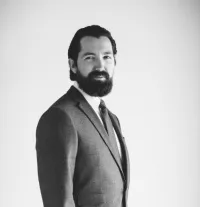

JAMES BOHAN – FOUNDER
James Bohan is a multi-faceted real estate professional, CPA, and entrepreneur. As the founder of Stonehan, he manages over $20MM of real estate while also providing accounting, tax, and fractional CFO solutions to real estate businesses, funds & syndicators . With more than 15 years’ of experience, he brings a wealth of knowledge in analyzing real estate transactions, tax structuring, creative financing techniques, and working capital management. Within the real estate investment management industry, Mr. Bohan is well regarded for his deep understanding of the complexities involved with a multitude of investment assets and complicated organizational structures.
Prior to Stonehan, James served as the inaugural employee and Chief Financial Officer of a Los Angeles-based real estate investment management firm, Mosaic Real Estate Investors. There, he played a key role in the firm’s growth and aligned the team through collaboration of management and stakeholders regarding strategic and financial planning, underwriting of debt and preferred equity investments, investor relations and reporting, risk management, compliance, cash flow, treasury, operating plans, tax matters, accounting, staffing, and policy development. Through his tenure with the company he oversaw all financial matters for the firm’s first ~$1B in loan commitments and the investor base grow to over 1,400 HNW investors and institutions.
Before joining Mosaic, James began his accounting career with the prestigious firm, Rothstein Kass, which was considered the premier boutique accounting firm for alternative investment vehicles: hedge fund, private equity, and venture capital firms. He worked there from 2010 until 2015 and during this time Rothstein was acquired by KPMG. James became an expert in real estate tax matters while offering tax and wealth management counsel to partnerships, trusts, REITs, corporations, and high-net-worth clients. He serviced private equity real estate firms with collective assets under management over $10B and consulted on over $2B of real estate transactions.
During this time from 2010 – 2015, James earned his California CPA license and was admitted to the Dollinger Master of Real Estate Development program at USC’s Sol Price School of Public Policy. He earned his Master’s in Real Estate Development (MRED) in 2015, graduating in the top 5% of his class and achieving an honorable mention for outstanding performance on the final comprehensive examination, all while continuing to work part-time for KPMG. He focused his undergraduate studies in Real Estate Finance and International Business, earning bachelor’s degrees in both Accounting and Business Administration from USC. His undergraduate academic achievements at USC included being accepted into the Marshall School of Business Honors Program and earning a spot on the Dean’s List. His collegiate social life centered around the Delta Chi Fraternity where he was elected to become a member of the executive committee. His summers were spent learning the nuances of real estate while serving internships in a variety of settings: residential mortgage lending, home building, and both corporate and onsite property management.
Mr. Bohan stays active professionally with involvement in the NIBCA, Information Management Network, and various other trade organizations. An avid traveler, he has visited over 40 countries, spent a semester studying abroad at Thammasat University in Thailand, and possesses dual citizenship in the United States of America and the Republic of Ireland.



⚡ Site Built with BAMF Technology ⚡