
White glove CFO services for sophisticated financial clientele
Who We Serve
A versatile approach with consistent results.

Real Estate Private
Equity Funds

Accredited
Investors

Real Estate
Developers

Real Estate
Family Offices
From the Stonehan Vault

Real Estate Professional Status and Material Participation: What Fund Managers Get Wrong
Real Estate Professional Status remains one of the most powerful tax designations in the IRC, yet it is also one of the most misunderstood. Fund managers, syndicators, and investors encounter this concept often, but relatively few understand how it works, who qualifies, and what mistakes can undermine the benefit.
For fund managers in particular, the stakes are high. Real Estate Professional Status affects how depreciation can be used, how losses flow through to personal returns, and whether cost segregation studies create real tax value or trapped passive losses. It is often the dividing line between a strategy that works and a strategy that collapses under review.
This blog breaks down the fundamentals of Real Estate Professional Status, the material participation rules, how grouping works, and the errors fund managers commonly make.
Why Real Estate Professional Status Matters
Under normal rules, rental real estate is a per se passive activity. That means losses from rentals, including depreciation from cost segregation studies and bonus depreciation, can only offset passive income. They cannot offset W2 income, business income, or portfolio income.
For fund managers and active investors, this limitation can dramatically reduce the benefit of depreciation.
Real Estate Professional Status changes the rules. If a taxpayer qualifies as a real estate professional and materially participates in their real estate activities, those activities are no longer treated as passive. Losses can offset other forms of income, including high W2 earnings or active business income. This is why Real Estate Professional Status is considered by many tax strategists to be the most valuable tax designation available to real estate investors.
The Requirements for Real Estate Professional Status
The tax code requires two tests to qualify as a real estate professional:
The taxpayer must perform more than 750 hours of services in real property trades or businesses during the year.
More than half of the personal services performed in all trades or businesses during the year must be in real property trades or businesses.
These two tests must be satisfied for Real Estate Professional Status to apply. The 750 hours must be in qualifying real estate activities, and the taxpayer must spend more time in real estate than in all other work combined.
The rules are strict, and the IRS closely examines taxpayers who claim this status.
What Counts as a Real Property Trade or Business
Qualifying real property trades or businesses include:
Real estate development
Acquisition and due diligence
Construction
Property management
Brokerage
Leasing
Architecture and design
Certain activities do not qualify, including work as an employee unless the taxpayer owns more than 5 percent of the employer.
It is common for fund managers to assume their involvement in a fund automatically qualifies them. That is not correct. The nature of the work must match the definition in the code.
Material Participation: The Second Gate
Real Estate Professional Status alone is not enough. Even if a taxpayer satisfies the 750-hour requirement, they must also materially participate in the specific rental activities generating the losses.
Material participation is determined through seven tests, but the most common are:
More than 500 hours spent on the activity
More than 100 hours and no other individual works more hours
Participation that is regular, continuous, and substantial
This is where many fund managers fail the test. Working as a GP, raising capital, reviewing underwriting, or attending investor meetings often does not count toward material participation in rental real estate unless those activities directly relate to operating rental properties.
Grouping Elections: How Investors Bridge the Gap
For many taxpayers, the solution to the material participation requirement is a grouping election.
Grouping allows the taxpayer to treat multiple real estate activities as one combined activity. When activities are grouped, hours spent across the entire group are aggregated for determining material participation.
This is especially important for investors who:
Own multiple rental properties
Are part of several joint ventures
Hold GP interests in real estate funds
Participate in both active and passive real estate activities
By grouping these activities, investors can meet the 500-hour requirement collectively, rather than having to meet it for each property individually.
However, grouping must be done correctly and documented properly, or the IRS can reject the election.
The Passive Investor Strategy: Offsetting Passive Gains
For investors who do not meet Real Estate Professional Status or material participation, bonus depreciation is still valuable. It just functions differently.
Passive investors often use depreciation from new investments to offset gains from maturing passive investments. This creates what some practitioners call a “lazy 1031” effect, where new depreciation offsets the gain from the sale or disposition of older properties without triggering tax.
This strategy is particularly effective when:
Investors have multiple deals in different lifecycle stages
Old investments are realizing passive gain
New investments offer large first-year losses through cost segregation
Fund managers should educate their LPs on this strategy, as it creates meaningful value even for passive investors who cannot use losses to offset active income.
Real Estate Professional Status for Married Couples
The tax code allows a married couple to qualify for Real Estate Professional Status if either spouse satisfies the requirements. The hours of only one spouse are considered.
Many fund managers take advantage of this rule. For example, one spouse may have a demanding career in finance or tax that does not qualify, while the other spouse focuses on real estate operations. If the spouse meets the requirements, the couple benefits.
This approach is common among real estate investors and is frequently used to unlock greater depreciation benefits.
Why Many Fund Managers Fail to Qualify
Despite the benefits, many fund managers misunderstand these rules and incorrectly assume they qualify. Common mistakes include:
Believing GP work satisfies the 750-hour requirement
Claiming hours from consulting, lending, or capital raising
Failing to materially participate in rental activities
Forgetting to document hours contemporaneously
Assuming LP hours qualify, which they do not
Overestimating involvement in property operations
Ignoring the grouping election entirely
The IRS actively audits Real Estate Professional Status claims. Documentation must be accurate, detailed, and defensible.
Why Real Estate Professional Status Is So Valuable
When used correctly, Real Estate Professional Status allows taxpayers to:
Use bonus depreciation to offset active income
Generate tax-free cash flow
Recycle capital more quickly
Improve internal rates of return
Strengthen fund performance metrics
Allocate depreciation strategically
For fund managers building long-term portfolios, Real Estate Professional Status can be transformative.
How Fund Managers Should Approach REPS in 2025
With permanent bonus depreciation, expanded cost segregation opportunities, and increased return expectations from LPs, Real Estate Professional Status will become even more important.
Fund managers should:
Review qualification status for themselves and their spouses
Evaluate material participation documentation
Create grouping elections where appropriate
Coordinate with tax counsel on entity structure
Integrate REPS planning into acquisition strategy
Educate LPs about passive loss benefits
Prepare documentation before year-end
Real Estate Professional Status cannot be fixed retroactively. Planning must occur during the year, not after it closes.
Book Your Tax Strategy Call with James
If you want to understand how Real Estate Professional Status and material participation apply to your fund, your investments, or your personal tax position, now is the time to take action. There is still time to review your documentation, evaluate grouping elections, and position your real estate activities for stronger tax outcomes before year-end. Once the year closes, these opportunities are gone.
Schedule Your Tax Strategy Session Now
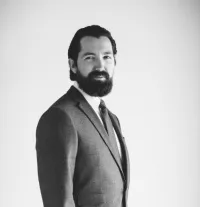
High-touch services with institutional expertise

Real Estate
CFO Services

Accredited
Investors

Real Estate
Developers

Hard Asset Management

Private Equity
Administration Services

Business Consulting

Private Banking &
Lending Relationships

Consolidate Net
Worth Picture

Spend Management
Featured Podcast Appearance
James Bohan on The Christian Capitalist Podcast:
Hosted By Russell Gray
Fund managers, private equity leaders, and real estate GPs are not supposed to play by retail tax rules.
In this Podcast, CPA and fund CFO James Bohan breaks down how sophisticated investors and managers can legally make taxes “optional” using entity structuring, real estate, cash-flow driven equity, and values-aligned planning.
If you’re running capital, managing other people’s money, and care about both performance and principles (where your tax dollars actually go), this is your lane.
Our Proven Track Record
Client saved over $200,000 in taxes
Client Challenge:
Starting and growing a business is no small feat, and navigating the complexities from formation to exit can be daunting. One of our clients faced this challenge, needing expert guidance to structure their business in a way that would optimize their financial outcomes, especially when it came time to sell.
Stonehan Accountancy Solution:
From the initial formation of the business, we worked closely with the client to design a structure that would not only support their growth but also provide significant tax advantages when it came time to exit.
Outcome:
By meticulously planning and strategically structuring the business, we were able to save our client over $200,000 in taxes upon the sale of their business. This wasn't just about compliance—it was about foresight, strategy, and maximizing financial gain.
Key Takeaway:
Stonehan Accountancy is dedicated to more than just managing numbers. We offer strategic insights and proactive planning that lead to substantial financial benefits. From the very beginning to the final sale, our expertise ensures that every decision made is one that contributes to your financial success.
Are you ready to see how strategic business structuring can transform your financial outcomes? Contact Stonehan Accountancy today to learn how we can guide your business from formation to a successful exit, with significant tax savings along the way.

Seven Critical Factors Most CPA's Overlook
There’s a difference between working with a CPA and working with an entrepreneurial CFO focused on serving fellow entrepreneurs. At Stonehan we guide our clients by going beyond surface level investigation, into the nuances that only sophisticated investors can appreciate.

Real Estate Private Equity Services
Comprehensive Fund Administration Services
Outsourced CFO Support
Strategic Tax Advisory
Consolidated Financial Reporting
White Glove Tax and Accounting
Ongoing Compliance
Back Office Support
Start Up Consulting
Advise on fund and management company organizational best practices
Business model consulting
Review and advise on fund formational documents
Attorney and compliance partner network referrals
Investment Accountancy
Fund Accounting
IRR & Performance Calculations
Asset Management Reports
DDQ Compliance Assistance
Investor Portal Management
KYC/AML/Accredited Investor Due Diligence Management
Fund Formation Consulting
Audit Coordination
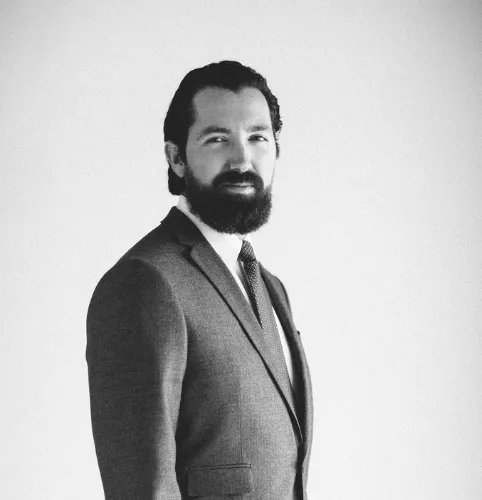
Why Stonehan
As a CFO with both institutional and entrepreneurial experience, Stonehan has the unique ability to offer strategic, personalized, and forward-thinking financial solutions that resonate with real estate family offices and high-net-worth individuals.


4th generation real estate developer

Institutional quality reporting, boutique quality attention



⚡ Site Built with BAMF Technology ⚡